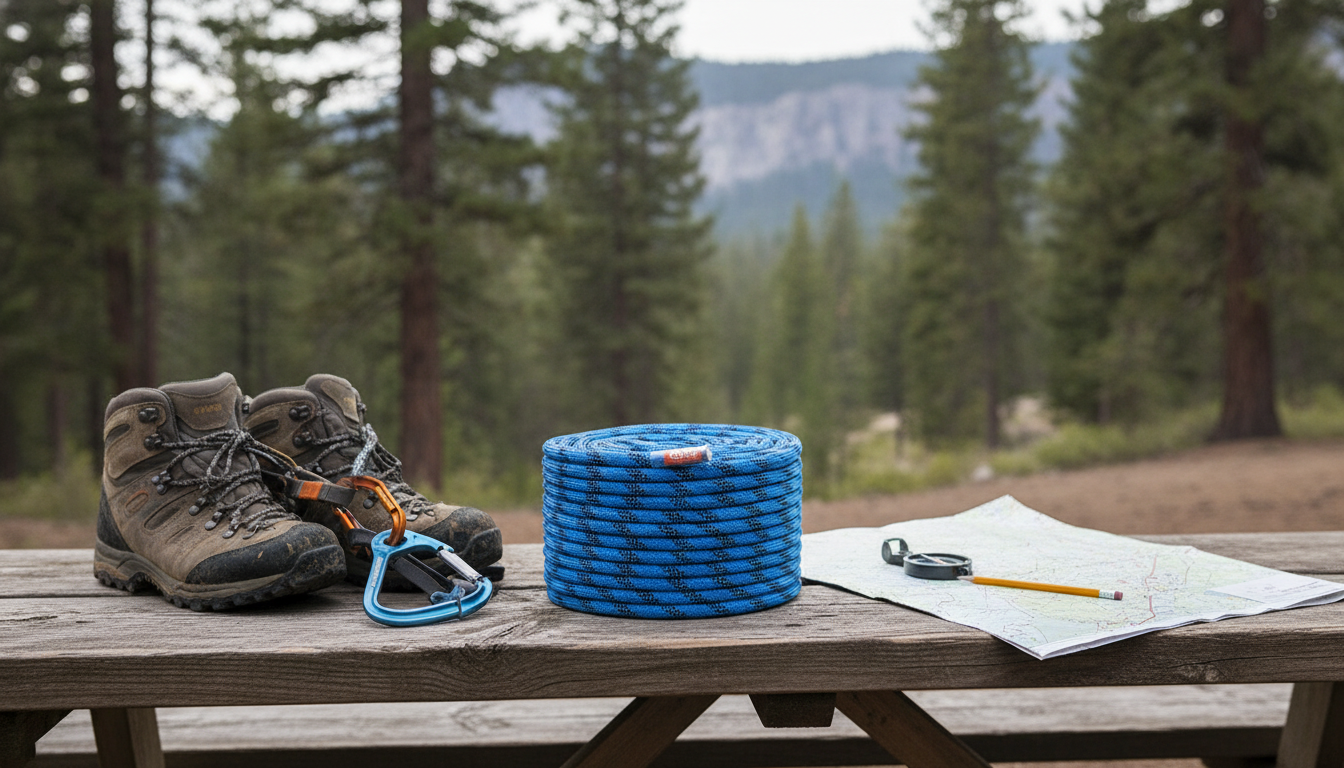
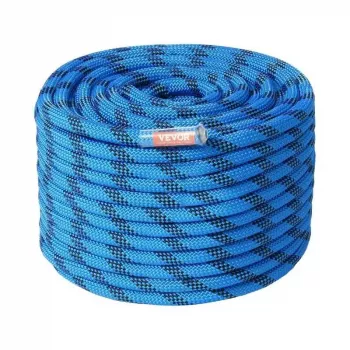
A thick static rope is built for controlled movement, hauling, positioning, and fixed-line tasks where low stretch and high strength matter. This 12.7mm option in 125/150/200ft lengths pairs a hefty diameter with a 32kN strength rating, making it a practical choice for outdoor work lines, training setups, and general rigging where predictable handling is the priority. For more guidance, see [PDF] Steep Slope Rope Access Guidelines.
Static (low-stretch) ropes are made for efficiency and consistency under load. When you’re moving on a fixed line, lowering a load, or setting up a controlled rappel, less elongation generally means less “bounce,” fewer surprises, and smoother device feel. For further reading, see [PDF] Effects of Abrasive Particles on the Projected Fatigue Life of Nylon ….
For a deeper look at how rope categories are defined and tested, review the UIAA safety standards and manufacturer guidance on rope types such as Petzl’s technical information.
Static rope selection is more than “long enough and strong enough.” Diameter, construction, and length influence device compatibility, carry weight, and how the rope behaves when loaded.
| Length | Good fit for | Watch-outs |
|---|---|---|
| 125ft | Short drops, training lines, compact rigging, backyard practice | May be limiting for longer rappels or multi-pitch fixed lines |
| 150ft | General-purpose outdoor use, moderate descents, hauling systems | Confirm route length and account for knots, anchor wrap, and tails |
| 200ft | Longer rappels, extended fixed lines, rescue-style lowers | More weight and bulk; plan rope management and storage |
A 12.7mm static line is commonly chosen when the goal is controlled movement and predictable load handling. The thicker profile can be especially helpful when gloves are worn, devices are tuned for work-style diameters, or the rope will see more abrasion than a typical crag day.
For professional and emergency-service contexts, standards such as NFPA 1983 can help frame expectations around life-safety rope systems, hardware, and documentation.
A tensile rating is valuable, but it’s not a promise that every configuration will hold anywhere near that number. Real-world systems are limited by the weakest link: anchors, connectors, knots, edge conditions, and how loads are introduced.
If there’s any chance of factor-like shock loading (unexpected falls, slack in the system, or hard catches), a static line demands more conservative practices—tight systems, backups, and careful load transitions.
At 12.7mm, you’ll want to confirm every “touch point” in the system. A device that’s slightly out of range can slip unpredictably or bind so tightly it becomes difficult to operate under load.
12.7mm Static Climbing Rope – 125/150/200ft Outdoor Rope with 32kN Strength (In stock)
| Feature | Value |
|---|---|
| Diameter | 12.7mm |
| Lengths | 125ft / 150ft / 200ft |
| Strength | 32kN |
| Type | Static (low stretch) |
Lead climbing typically requires a dynamic rope designed to absorb fall energy. Static ropes are generally intended for rappels, fixed lines, hauling, and positioning where low stretch is beneficial.
Start with the longest expected drop or span, then add extra length for anchor wraps, knots, and safe tails. If you’ll double the rope through an anchor for a lower or rappel, make sure your chosen length still covers the full distance.
Check each device’s manufacturer-listed rope diameter range; some devices can slip or bind if the rope is outside spec. Before relying on it outdoors, test the setup in a controlled environment with appropriate backups.









Leave a comment