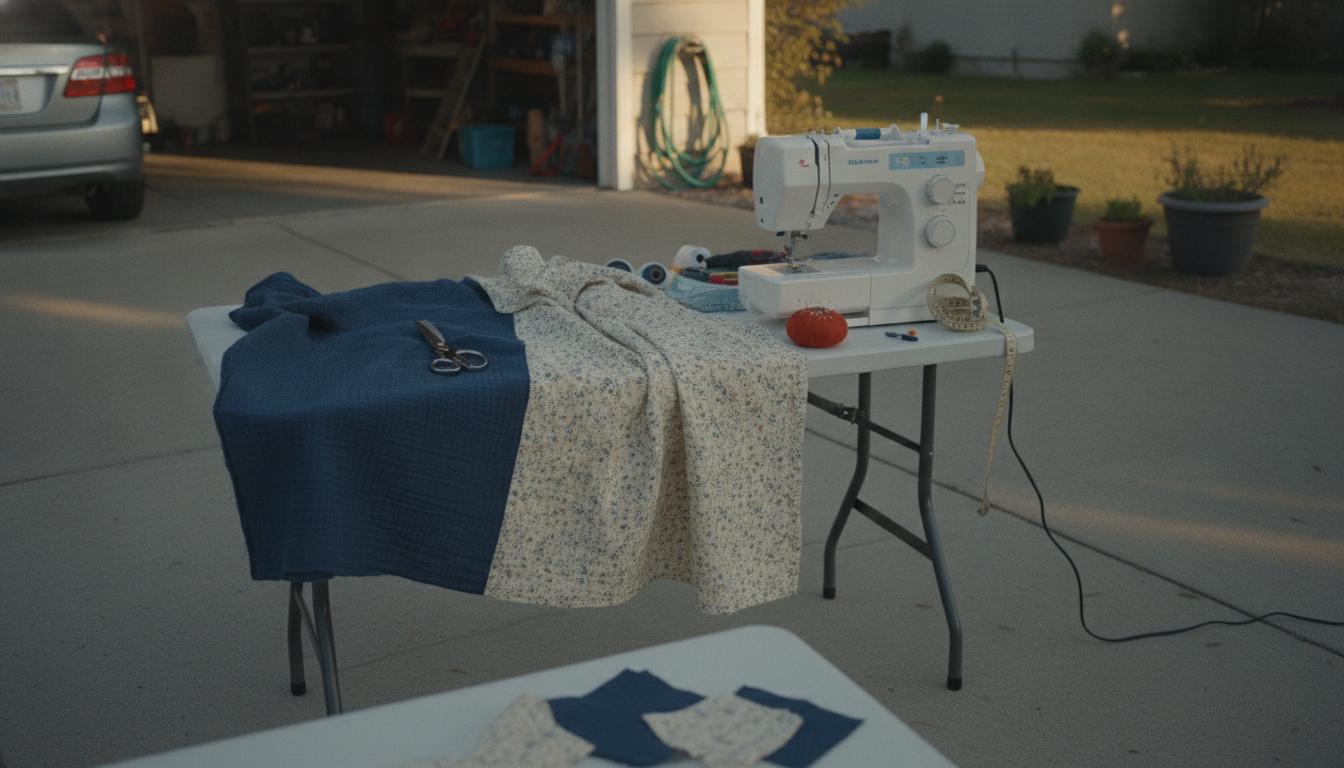
Cotton double gauze isn’t hard to sew, but it does require a slightly different approach than crisp quilting cotton. The fabric is soft, airy, and lightly crinkled, so it can shift, stretch a bit on the bias, and “grow” if it’s pushed through the machine. With a few simple adjustments, most sewists find it very manageable—even for garments, baby items, and breezy home projects.
The same qualities that make double gauze comfortable can make it fussy at the cutting and stitching stages. It’s usually two thin layers tacked together, which can slide if not stabilized. Edges may fray, seams can ripple if over-handled, and the fabric can look wavy if it’s stretched while pressing. None of these issues are permanent dealbreakers; they’re mostly about controlling movement and using gentle handling.
Prewash and dry it the way the finished item will be laundered. Double gauze often tightens up after washing and can shrink. When cutting, use a rotary cutter and pattern weights if possible, and avoid letting the fabric hang off the table where it can distort.
A sharp or microtex needle (often size 70/10 or 80/12) helps pierce cleanly without snagging. Use a good all-purpose polyester thread and a slightly longer stitch length than usual (around 2.5–3.0 mm) to reduce puckering. If the fabric “eats” into the needle plate, a straight-stitch plate or a stabilizer strip at the start can help.
Because it frays, choose finishes like French seams, serging, or a clean zigzag/overcast stitch. Press gently—lift and set the iron rather than dragging it—and use steam carefully to avoid stretching.
For a deeper, step-by-step walkthrough (including handling tips and common mistakes), visit the full guide on cotton double gauze.
Yes. Prewashing helps remove sizing, allows the fabric to do its initial shrink, and reveals the final texture so your finished project keeps its shape after laundering.











Leave a comment